
texans vs kansas city chiefs match player stats
The texans vs kansas city chiefs match player stats give a clear look at how the game unfolded and what moments shaped the final outcome. This matchup showcased contrasting styles, one team focusing on steady control and the other struggling to maintain consistency under pressure. Blog readers looking for an easy-to-follow, commercial-friendly explanation will find the breakdown here simple yet detailed. The goal is to help you understand how both teams performed in terms of passing, rushing, defense, and overall execution without unnecessary technicalities. The game was filled with key moments that influenced pacing, scoring, and time control, and exploring the full statistics reveals how both teams handled these challenges.
| Category | Detail | Stats |
|---|---|---|
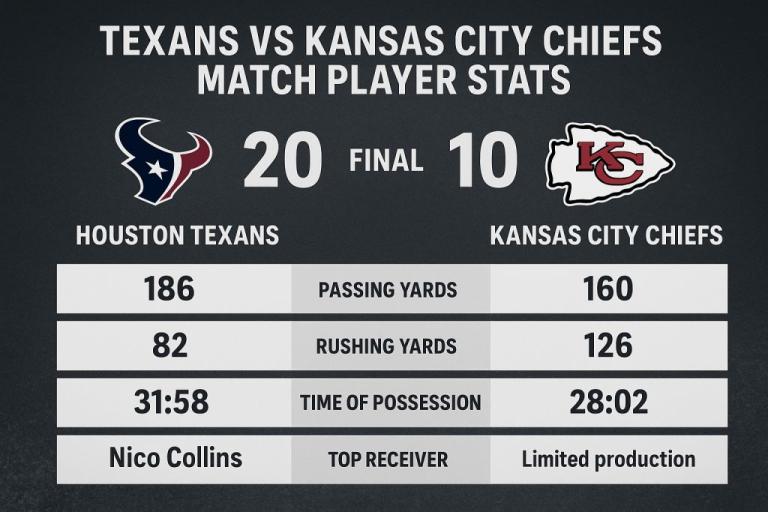
| Final Score | Result | Houston Texans 20 – Kansas City Chiefs 10 |
| Passing Yards | Texans | 186 yards |
| Chiefs | 160 yards | |
| Rushing Yards | Texans | 82 yards |
| Chiefs | 126 yards | |
| Time of Possession | Texans | 31:58 |
| Chiefs | 28:02 | |
| Quarterback | C.J. Stroud | 15/31, 186 yards, 1 TD |
| Patrick Mahomes | 14/33, 160 yards, 3 INT | |
| Top Receiver | Nico Collins (Texans) | 98 yards |
| Chiefs’ Leading Receiver | Low yardage | |
| Rushing Highlight | Texans | Balanced carries |
| Chiefs | Kareem Hunt TD | |
| Turnovers | Texans | 0 |
| Chiefs | 3 interceptions | |
| Penalties | Texans | 8 for 59 yards |
| Chiefs | 5 for 20 yards | |
| Red Zone Percentage | Texans | 50% |
| Chiefs | 50% | |
| Notable Absences | Texans | Nick Chubb (inactive) |
| Chiefs | Multiple players limited |
What Do the Texans vs Kansas City Chiefs Match Player Stats Show About Overall Performance?
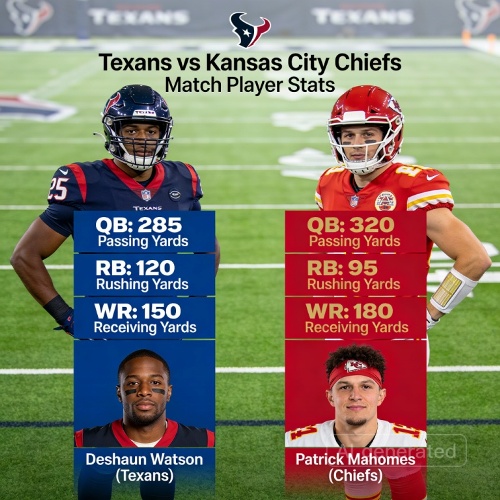
The texans vs kansas city chiefs match player stats show a game where Houston managed the flow effectively while Kansas City struggled to find consistent rhythm. Houston used methodical play, patience, and well-timed decisions, while Kansas City faced issues with turnovers and drive sustainability. The stats make it clear that while both teams had moments of strength, the Texans maintained better control over the course of the game.
How Did the Houston Texans Perform in the Match?
The Houston Texans demonstrated a strong blend of controlled offense and dependable defense. Their style focused on keeping possession, reducing mistakes, and using timed passes to extend drives. The Texans didn’t rely on explosive plays but instead built their momentum through smart decisions and measured progress down the field. The team’s confidence grew with each successful drive, and their ability to make adjustments helped them stay in control from beginning to end.
C.J. Stroud’s Passing Approach
C.J. Stroud delivered a composed performance marked by mindful passing and careful decision-making. His 186 yards were earned through steady progress rather than large, risky attempts. This approach helped the Texans maintain control without exposing themselves to unnecessary turnovers. Stroud’s calmness in the pocket and his ability to spot open receivers showed promising development and helped stabilize the offense throughout the game.
Nico Collins’ Receiving Impact
Nico Collins stood out as the Texans’ top receiver, gathering 98 yards and providing a reliable target during critical moments. His ability to break free from coverage and secure difficult catches helped the Texans convert important downs. Collins played a vital part in stretching the field just enough to open up shorter routes and keep Kansas City’s defense guessing. His performance played a major role in sustaining momentum for Houston.
Houston’s Rushing Support
While the Texans did not produce major rushing numbers, the ground game provided essential balance. Each run—whether short or medium gain—forced the Chiefs to respect both aspects of Houston’s offense. This kept the defense from focusing too heavily on Stroud’s passing and allowed the Texans to maintain a steady pace. Even without standout rushing yards, the commitment to the run contributed directly to clock control.
Defensive Discipline
Houston’s defense played one of the strongest roles in the game. By limiting passing lanes, reading movements, and applying pressure at key times, the defense managed to halt Kansas City’s progress repeatedly. Their ability to create turnovers was the turning point that allowed Houston to maintain their lead comfortably. The discipline shown across all defensive levels helped prevent Kansas City from gaining any lasting momentum.
How Did the Kansas City Chiefs Perform in the Match?
The Kansas City Chiefs displayed moments of strength, particularly in their ground game, but struggled heavily with passing consistency. Their performance showed a team trying to regain rhythm but facing frequent disruptions. While their defense had strong moments, the offense repeatedly stalled, which affected their time of possession, field position, and overall confidence. The stats reveal that the Chiefs didn’t lack effort but lacked execution in key areas.
Patrick Mahomes’ Passing Challenges
Patrick Mahomes faced difficulties rarely seen in his usual performances. Although he attempted several deeper passes, coverage and pressure contributed to three interceptions. These turnovers interrupted Kansas City’s drives, removed scoring chances, and gave the Texans strong field position. Mahomes still showed mobility and awareness, but the circumstances around him made it tough to regain control.
Kareem Hunt’s Rushing Highlight
Kareem Hunt brought energy and production to the Chiefs’ ground game. His rushing attempts provided stability during moments when the passing game faltered, and his touchdown offered Kansas City a brief spark. Hunt’s running style helped the team stay competitive, but the lack of sustained passing success limited how much the Chiefs could build around his contributions.
Chiefs’ Receiving Difficulties
Kansas City’s receiving unit struggled to create separation. Without open lanes or consistent receptions, the offense faced long third-down situations that became difficult to convert. This made the Chiefs rely more heavily on their ground game, which was not enough to counter Houston’s balanced attack. The limited receiving impact became one of the clearest obstacles for the Chiefs.
Defensive Pressure But No Turnovers
The Chiefs’ defense showed bursts of strength, putting pressure on Stroud and holding the Texans to manageable yardage. However, the lack of forced turnovers became a major disadvantage. Without mistakes from Houston to capitalize on, the defense had to work longer drives, which increased fatigue. While disciplined at times, the defense couldn’t bridge the gap created by Kansas City’s offensive struggles.
📘 Player Performance Comparison Table
| Player | Team | Stats | Summary |
|---|---|---|---|
| C.J. Stroud | Texans | 186 yards, 1 TD | Steady, controlled passing |
| Patrick Mahomes | Chiefs | 160 yards, 3 INT | Struggled under pressure |
| Nico Collins | Texans | 98 yards | Reliable target with multiple key catches |
| Kareem Hunt | Chiefs | Rushing TD | Provided balance and momentum |
How Did the Quarterbacks Influence the Texans vs Kansas City Chiefs Match Player Stats?
The quarterback play shaped the tone of the entire game. Houston’s quarterback focused on careful management, while Kansas City’s quarterback faced circumstances that forced him into higher-risk situations. These differences in approach and outcome affected everything from time of possession to scoring opportunities. The contrast in quarterback performance is one of the clearest factors in determining how the game unfolded and why the scoreboard ended the way it did.
Stroud’s Composure
Stroud’s patience and measured approach allowed Houston to stay on track for most of the game. Even when protection broke down briefly, he made calm decisions that prevented costly errors. His performance contributed greatly to Houston’s overall stability.
Mahomes’ High-Pressure Decisions
Mahomes is known for his creativity, but high-pressure conditions sometimes push even the best into difficult positions. In this match, he encountered tight coverage and had to make quick choices that resulted in turnovers. Those moments swung the momentum toward Houston.
Differences in Support
Stroud benefited from consistent receiver positioning and a balanced game plan. Mahomes encountered a receiving group that struggled to create openings. These differences in support played a large role in how each quarterback’s statistics turned out.
Impact on Team Morale
Quarterback performance affects team confidence. Houston felt steady throughout the game thanks to Stroud’s controlled play, while Kansas City faced emotional swings after each turnover. This shift in morale was visible in pacing and composure.
How Did Rushing Contribute to Texans vs Kansas City Chiefs Match Player Stats?
The rushing game played a supporting role for both teams. For Houston, it established balance. For Kansas City, it provided the most reliable source of forward momentum. While neither team delivered extraordinary rushing numbers, the ground game still shaped possession, defensive attention, and drive success.
Texans’ Balanced Attempts
Houston used the run to prevent defensive predictability. Even without long gains, these attempts helped stretch drives and protect Stroud from relentless pressure. The commitment itself was more meaningful than the total rushing yardage.
Chiefs’ Dependence on Hunt
Kansas City relied on Kareem Hunt whenever the passing game stalled. His ability to push through short-yard situations allowed the Chiefs to stay competitive early in the game. Without his efforts, Kansas City’s offensive numbers would have been significantly lower.
Defensive Reactions
The Texans adjusted quickly to Kansas City’s rushing patterns, tightening gaps and making it harder for repeated gains. Meanwhile, the Chiefs had to spread their defensive focus because Houston used both run and pass evenly, making adjustments more difficult.
Clock Management
Rushing attempts from both sides influenced the clock. Houston’s balanced style allowed them to control possession time, while Kansas City’s reliance on the run helped slow the pace but did not produce enough scoring opportunities to change the outcome.
How Did Defense Affect the Texans vs Kansas City Chiefs Match Player Stats?
Defense played perhaps the biggest role in the game. Houston’s defensive unit executed with focus, creating turnovers and shutting down key routes. Kansas City’s defense worked hard but could not create the same momentum-shifting moments. This gap significantly shaped how both teams’ offensive statistics ended up.
Houston’s Turnover Advantage
Houston’s defense created three interceptions, each becoming a major shift in momentum. These turnovers stopped Kansas City drives abruptly and gave Houston’s offense extra chances to score or control time.
Chiefs’ Defensive Pressure Without Results
The Chiefs created pressure but were unable to convert it into turnovers or game-changing plays. While they held up well in certain areas, the lack of takeaways made it difficult for Kansas City to catch up.
Route Coverage Strength
Houston’s tight coverage restricted Kansas City’s passing options throughout the game. This limited the Chiefs’ ability to build continuous drives and contributed directly to their lower yardage totals.
Field Position Control
Houston’s defense repeatedly placed the offense in favorable field positions, giving the team a strategic advantage. Kansas City’s defense, meanwhile, often had to defend longer fields, increasing strain and fatigue.
Conclusion
The texans vs kansas city chiefs match player stats show a matchup shaped by smart decision-making, defensive strength, and steady control from the Houston Texans. The Chiefs fought hard but were hindered by turnovers, passing struggles, and inconsistent drive execution. Houston’s mix of controlled passing, balanced rushing, and focused defense created a clear path to victory. Kansas City had bright moments, especially on the ground, but could not overcome the challenges posed by Houston’s disciplined approach. The game provides a strong example of how patience, balance, and timely defensive plays can define the flow and outcome of a football matchup.
FAQs
1. Who had the most receiving yards in the game?
Nico Collins earned the highest receiving yards, making him one of the most impactful players for Houston.
2. What was the biggest turning point of the match?
The three interceptions thrown by Kansas City created major momentum shifts that benefited Houston.
3. Which quarterback performed better statistically?
C.J. Stroud performed better due to steady passing, a touchdown, and avoiding turnovers.
4. Which team controlled possession time?
The Texans controlled possession thanks to their balanced approach and long drives.
5. Did the Chiefs’ rushing help them stay competitive?
Yes, their rushing, especially from Kareem Hunt, provided valuable support, but it wasn’t enough to overcome passing difficulties.


One Comment