
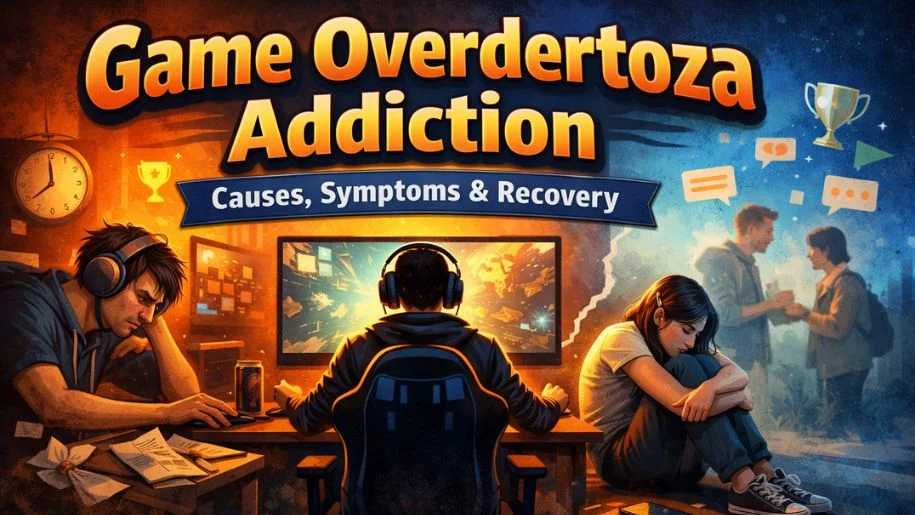
Game Overdertoza Addiction: Signs & Recovery
Digital entertainment has evolved at lightning speed. Online games are more immersive, competitive, and socially connected than ever before. But with that evolution comes a growing concern many families and players are quietly facing: game overdertoza addiction.
While the term may sound unusual, it refers to a pattern of excessive, uncontrollable gaming behavior that begins to interfere with daily life, mental health, relationships, and responsibilities. It’s not just about “playing too much.” It’s about losing control — and feeling unable to stop even when the consequences are obvious.
Let’s unpack what this means, why it happens, and how recovery is genuinely possible.
What Is Game Overdertoza Addiction?
Game overdertoza addiction describes compulsive gaming behavior where a person prioritizes video games over work, school, relationships, sleep, and even physical health. It’s closely related to what experts classify as gaming disorder — a behavioral addiction marked by impaired control and persistent play despite negative outcomes.
Unlike casual gaming, this condition includes:
- Loss of time awareness while playing
- Irritability or anxiety when not gaming
- Neglect of real-world responsibilities
- Failed attempts to cut back
- Continued play despite clear harm
The key distinction isn’t hours alone — it’s impact.
Why Is It So Hard to Stop?
Modern games are engineered to be engaging. Reward loops, leveling systems, competitive ranking, in-game currencies, and social interaction activate the brain’s dopamine system. Over time, the brain begins to associate gaming with relief, achievement, and validation.
For some individuals, especially teens and young adults, gaming becomes:
- A stress escape
- A social substitute
- A way to avoid difficult emotions
- A source of identity
In one real-world scenario, a university student starts skipping morning classes because late-night gaming sessions run until 3 a.m. Grades drop. Sleep patterns collapse. Friends outside the gaming circle fade away. Yet the student keeps logging in — not because it’s fun anymore, but because stopping feels uncomfortable.
That’s when recreation becomes dependency.
Signs and Symptoms to Watch For
Recognizing early signs can prevent long-term consequences.
Behavioral Signs
- Increasing playtime despite promises to reduce it
- Lying about gaming duration
- Isolation from family or friends
- Ignoring hygiene or meals
Emotional Signs
- Mood swings when interrupted
- Feeling empty or bored without gaming
- Anxiety or restlessness offline
Physical Signs
- Chronic fatigue
- Headaches or eye strain
- Weight gain or loss
- Poor posture-related pain
When these patterns persist for months, intervention may be necessary.
Casual Gaming vs. Problematic Gaming
Here’s a simple comparison to clarify the difference:
| Aspect | Healthy Gaming | Addictive Gaming Pattern |
|---|---|---|
| Time Control | Scheduled and limited | Uncontrolled, excessive |
| Emotional Impact | Relaxing and enjoyable | Irritability when stopped |
| Responsibilities | Prioritized first | Frequently neglected |
| Social Life | Balanced online & offline | Mostly online interactions |
| Sleep & Health | Maintained | Disrupted regularly |
The difference lies in balance. Entertainment should enhance life — not replace it.
Psychological and Social Factors
Game overdertoza addiction rarely appears without underlying triggers. Common contributing factors include:
- Depression or anxiety
- Social insecurity
- Academic or work stress
- Loneliness
- Low self-esteem
Online environments provide instant feedback and structured goals — something real life often lacks. Achievements are measurable. Progress is visible. Social interaction feels safer behind a screen.
I once spoke to someone who admitted that earning virtual trophies felt more meaningful than receiving real-life praise, because the game gave immediate recognition.
That emotional reinforcement cycle is powerful.
Impact on Mental and Physical Healt
Long-term compulsive gaming can lead to:
1. Anxiety and Depression
Excessive gaming may worsen isolation and increase emotional dependency on virtual worlds.
2. Cognitive Effects
Reduced attention span and difficulty focusing on offline tasks.
3. Sleep Disorders
Blue light exposure and adrenaline from competitive play disrupt natural sleep rhythms.
4. Relationship Strain
Arguments with parents, partners, or roommates often revolve around screen time and neglect.
The problem escalates when gaming becomes the primary coping strategy.
Can Game Overdertoza Addiction Be Treated?
Yes. Recovery is realistic — but it requires intentional steps.
Step 1: Awareness
Acknowledging the problem is the hardest yet most important step.
Step 2: Structured Time Limits
Setting strict gaming windows reduces compulsive play.
Step 3: Replace, Don’t Remove
Substitute gaming with alternative dopamine sources:
- Exercise
- Skill learning
- In-person social activities
- Creative hobbies
Step 4: Digital Detox Periods
Short breaks help reset the brain’s reward system.
Step 5: Professional Support
Therapy, especially cognitive-behavioral approaches, helps address emotional triggers.
Practical Strategies for Parents and Adults
For Parents:
- Keep devices in shared spaces
- Set consistent digital boundaries
- Encourage extracurricular activities
- Avoid shaming — focus on communication
For Adults:
- Track gaming hours weekly
- Disable auto-play or notification triggers
- Prioritize morning routines before screen use
- Join accountability groups
Small adjustments compound over time.
Prevention: Building Healthy Digital Habits
Prevention isn’t about banning games. It’s about creating structure early.
- Teach time management
- Encourage offline friendships
- Promote physical activity
- Model balanced screen behavior
Gaming can coexist with a healthy life — when boundaries are clear.
When to Seek Immediate Hel
Consider professional assistance if:
- Academic or job loss occurs
- Aggressive behavior emerges
- Severe sleep deprivation continues
- Depression symptoms worsen
Ignoring severe patterns only deepens the cycle.
The Bigger Picture
Game overdertoza addiction isn’t about blaming technology. It’s about understanding human psychology in a hyper-stimulating digital world.
Games offer achievement, identity, escape, and community. When real life feels uncertain or overwhelming, the structured world of gaming feels safer.
But fulfillment built solely in a virtual environment eventually leaves real-world gaps.
Balance is the goal — not elimination.
Read More: FeedBuzzard Com Latest: Updates & Trends Guide
Conclusion
Game overdertoza addiction reflects a broader challenge of modern life: navigating powerful digital systems without losing control. It develops gradually, often unnoticed, and intensifies when emotional needs go unmet offline.
The good news? Awareness, structured habits, and supportive environments make recovery possible. Gaming can remain an enjoyable hobby — as long as it doesn’t dominate your identity, time, and wellbeing.
If you or someone you know is struggling, start small. Honest conversations, realistic limits, and healthier routines create meaningful change.
Because the real victory isn’t leveling up in a game — it’s regaining balance in life.
FAQs
Is game overdertoza addiction officially recognized?
It aligns with gaming disorder classifications recognized by health authorities, though terminology may vary.
How many hours of gaming is considered addictive?
There’s no fixed number. Addiction depends more on life disruption than total hours played.
Can adults develop this addiction?
Yes. While common among teens, adults are equally vulnerable.
Does quitting gaming completely solve the issue?
Not always. Addressing emotional triggers is essential for long-term recovery.
Are online multiplayer games more addictive?
Competitive and reward-driven games may increase dependency risk due to social and achievement loops.